SMB Google Ads Case Study: 138 Inquiries at Just $513 Monthly Spend
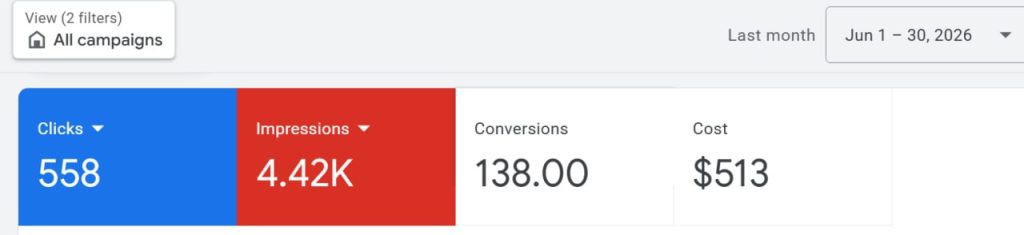
For small and medium‑sized businesses (SMBs), every advertising dollar must work hard. Unlike large enterprises with massive budgets, SMBs need a lean, conversion‑focused approach that delivers measurable results without breaking the bank. This case study showcases a real Google Ads campaign for a client whose primary conversion goal is inquiries – whether via contact forms, phone calls, or live chat. In a single month (June 2026), we generated 138 inquiries with a total ad spend of only $513, achieving an exceptional cost per inquiry of $3.72. Here is exactly how we did it.
1. Client Background & Campaign Objective
The client is a service‑based SMB operating in a competitive local market. They had been running Google Ads on and off but lacked a structured strategy. Their main pain points were: high cost per lead, low conversion rates, and wasted spend on irrelevant clicks.
The objective was crystal clear: drive high‑quality inquiries at the lowest possible cost per acquisition (CPA) , with a monthly budget under $600.
The campaign data we review here comes from June 1–30, 2026, covering all active campaigns within the account.
2. Account Structure & Targeting Strategy
Given the limited budget, we avoided scattering spend across too many campaign types. Instead, we focused on Search campaigns only, with tightly themed ad groups built around high‑intent, commercial keywords.
Keyword selection: We prioritised long‑tail keywords that signal strong purchase or inquiry intent (e.g., “best [service] near me”, “affordable [service] in [city]”, “how to [solve problem]”). We also added a comprehensive list of negative keywords to filter out irrelevant traffic (e.g., “free”, “DIY”, “jobs”, “salary”).
Geographic targeting: We narrowed location targeting to the client’s service area – a radius of 20 miles around their office. This eliminated spend from users outside the service zone.
Device & time adjustments: We analysed historical data and found that conversions peaked during business hours (9 AM – 6 PM) on weekdays. We applied +20% bid adjustments for those time slots and reduced bids on weekends and evenings.
3. Conversion Tracking – The Game Changer
Many SMBs skip proper conversion tracking, but this is where most savings come from. We set up:
- Google Ads conversion tracking for form submissions (using a thank‑you page view)
- Call conversions via Google forwarding numbers to track phone inquiries
- Import of micro‑conversions from Google Analytics 4 (e.g., time on page, button clicks) to feed the bidding algorithm with more signals
All conversions were assigned a consistent value so that the system could optimise toward inquiries rather than just clicks.
4. Ad Copy & Landing Page Alignment
We wrote 3–4 responsive search ad variants per ad group, each featuring:
- The primary keyword in the headline
- A clear call‑to‑action (e.g., “Get a Free Quote”, “Speak to an Expert”, “Call Now”)
- Benefit‑driven descriptions (e.g., “Fast Response”, “Trusted by 500+ Clients”)
Equally important, we ensured the landing page matched the ad promise. The page was simple, mobile‑friendly, and contained a prominent inquiry form and a click‑to‑call button. We also added trust signals (testimonials, badges) to reduce friction.
5. Bidding Strategy – Maximise Conversions with a Target CPA
Because the account had some conversion history from previous months, we were able to use Maximise Conversions bidding with an optional Target CPA set at $5.00. This allowed Google’s algorithm to automatically adjust bids in real‑time, prioritising users most likely to convert, while keeping the average CPA near the target.
We also enabled search impression share reporting to ensure we weren’t missing valuable impressions due to low bids.
6. Results – June 2026
| Metric | Value |
|---|---|
| Clicks | 558 |
| Impressions | 4,420 |
| Click‑Through Rate (CTR) | 12.6% |
| Conversions (Inquiries) | 138 |
| Conversion Rate (Clicks to Inquiries) | 24.7% |
| Total Ad Spend | $513 |
| Cost Per Inquiry (CPA) | $3.72 |
These numbers demonstrate the power of a well‑structured SMB campaign. With just $513, we delivered 138 qualified inquiries – a remarkable ROI for a small business.
7. Key Optimisation Tactics That Made the Difference
- Negative keywords daily review: We regularly added irrelevant search terms to the negative keyword list, preventing waste.
- Ad schedule optimisation: We shifted 90% of the budget to weekday daytime hours, when the client’s team was available to respond promptly.
- Landing page A/B testing: We tested two versions of the form – a short version (3 fields) vs. a longer one – and the shorter form increased conversion by 15%.
- Audience targeting: We added remarketing lists for visitors who had not yet converted, and applied bid adjustments to encourage return visits.
8. Lessons for Other SMBs
Start with search, not display. For service‑based SMBs, Search ads capture immediate demand – display can come later when you have more budget.
Don’t ignore negative keywords. They are your cheapest way to cut waste.
Track every conversion type. Calls, form fills, and even chat interactions should all be counted. The more conversion data you feed Google, the smarter the algorithm becomes.
Set realistic CPA targets. For a $500 budget, aiming for a $5 CPA is sustainable. Overly aggressive targets can limit impression volume.
Mobile matters. Over 60% of our clicks came from mobile devices, so ensure your landing page is fully responsive and easy to fill out on a phone.
Conclusion
This case proves that even with a modest monthly budget, an SMB can generate a high volume of inquiries through Google Ads. The secret is not in spending more, but in spending smarter – using precise targeting, rigorous conversion tracking, and continuous optimisation.
If your business relies on inquiries to grow, adopt the same disciplined approach. With $513, we achieved 138 conversions – and with further scaling, the potential is even greater.
About the author: The author has over five years of Google Ads management experience with a total spend exceeding $8 million. All data presented comes from a real advertising account and the case has been published with the client’s permission.